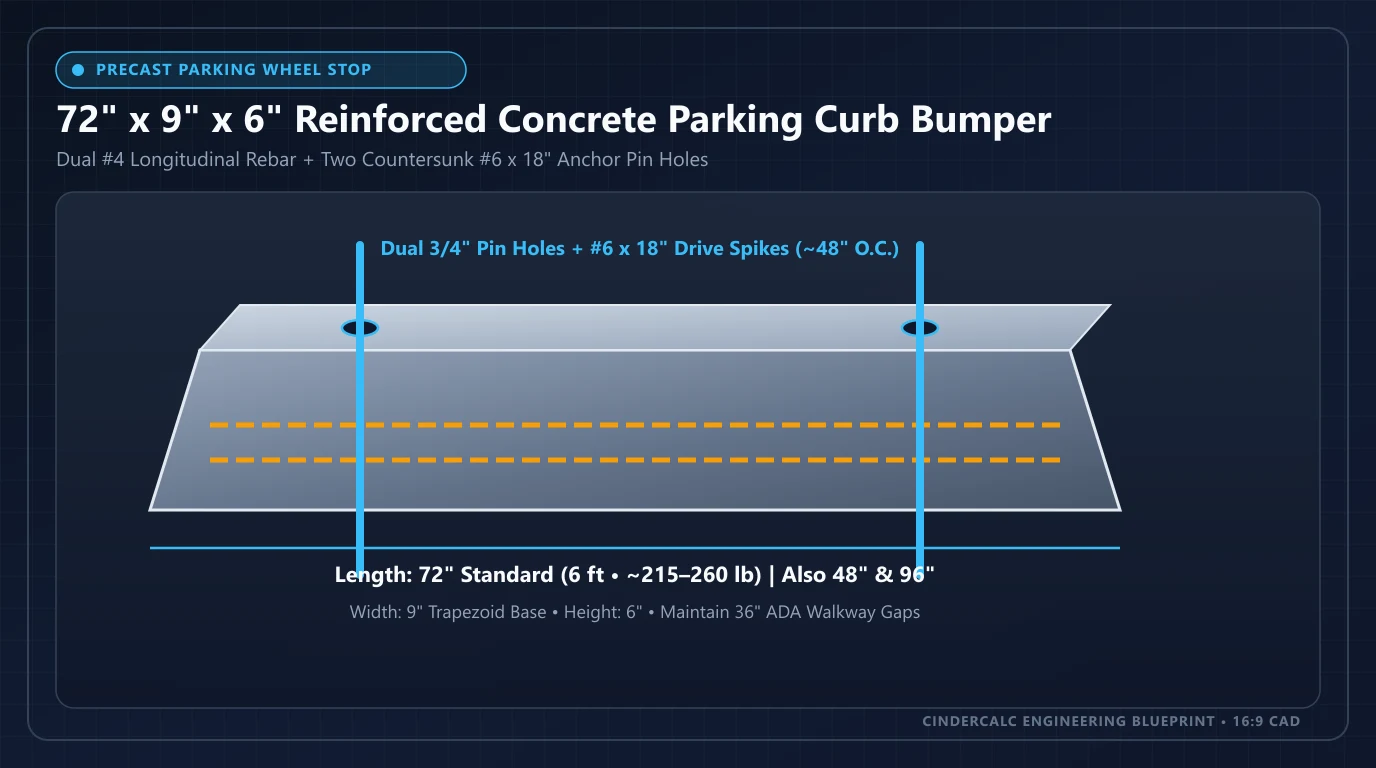
Precast Concrete Parking Curb Wheel Stop Blueprint (6-ft Standard)
Inspect standard 72" × 9" × 6" reinforced concrete wheel stops with dual 3/4" anchor pin holes and chamfered beveled top edges.
Precast Parking Curb Wheel Stop & Spike Estimator
Size 6-ft vs 4-ft reinforced wheel stops, #6 × 18" anchor spikes, and yellow traffic marking coverage.
Standard Precast Concrete Parking Bumper Dimensions & Weights
4 ft to 8 ft Mold Profiles (Metric Included)Precast concrete wheel stops use a tapered trapezoidal cross-section—narrower at the top chamfer (typically 5" to 6" wide) and wider at the pavement footprint (8" to 9" standard, or up to 12" on heavy truck stops)—to resist tire roll-over without shearing. While 6" H × 8" base W × 72" L (~195–215 lb) is the classic retail standard, commercial heavy-duty molds widen the base to 9" (~235 lb). All weights and pallet counts below are illustrative planning examples based on ~145–150 lb/ft³ precast concrete.
| Nominal Size | Actual Profile (L × Base W × H) | Metric Dimensions (mm) | Illustrative Unit Weight | Anchor Holes | Primary Parking Application |
|---|---|---|---|---|---|
| 4 ft Compact / EV | 48" × 8"–9" × 5-1/2"–6" | 1,219 × 203–229 × 140–152 | ~130–165 lb | 2 holes (30" o.c.) | Compact car stalls, EV charger protection & garage bays |
| 6 ft Standard Stall | 72" × 8"–9" × 6" | 1,829 × 203–229 × 152 | ~195–235 lb | 2 holes (48" o.c.) | Standard 9-ft commercial passenger & ADA accessible stalls |
| 7 ft Wide SUV | 84" × 8-1/2"–9" × 6" | 2,134 × 216–229 × 152 | ~240–295 lb | 2–3 holes (60" span) | Full-size SUVs, wide 10-ft stalls & angled curb lanes |
| 8 ft Heavy Truck | 96" × 9"–12" × 6"–8" | 2,438 × 229–305 × 152–203 | ~300–450 lb | 3 holes (36" o.c.) | Box trucks, loading docks, fleet yards & heavy equipment |
Planning formula example: Trapezoidal volume (ft³) = ((Top W + Base W) ÷ 2) × H × L ÷ 1,728; multiply by ~148 lb/ft³ normal-weight precast concrete (e.g., 6-ft stop with 5.5" top, 8" base, 6" H ≈ 1.38 ft³ × 148 ≈ 204 lb).
Internal Rebar Cages, Air-Entrainment & Drainage Weep Channels
Dual #3 / #4 Longitudinal Steel Reinforcement
Because parking bumpers sit on imperfect asphalt crowns and experience repeated lateral tire impacts, unreinforced concrete curbs quickly fracture across the middle. Commercial precast stops embed two continuous #3 (3/8") or #4 (1/2") deformed steel bars running full length inside a 4,000–5,000 PSI air-entrained concrete matrix.
Even if a snowplow blade chips a corner or surface hairline cracking occurs, the dual steel bars keep the wheel stop intact and anchored to its pins.
Molded Underside Drainage Weep Scuppers
Commercial-grade 6-ft, 7-ft, and 8-ft precast stops incorporate two or three arched or rectangular weep channels (1"–1-1/2" high × 3"–4" wide) cast along the underside base. These drainage openings prevent the bumper from acting like a dam against lot sheet flow.
Maintaining clear scuppers stops water from pooling behind the bumper, reducing winter black ice, asphalt binder stripping, and premature spalling around the anchor holes.
ADA Accessible Stall Placement, Overhang Setback & Clear Gaps
Under ADA Standards for Accessible Design and municipal parking ordinances, wheel stops serve two distinct safety roles: protecting pedestrian routes from vehicle front-bumper overhang and preserving clear walking aisles between parked cars. Misplaced bumpers are a leading cause of lot trip-and-fall claims.
Position the stop centerline 30 to 36 inches from the front sidewalk curb, landscape border, or building facade so a car's front overhang stops clear of the required 36" minimum accessible sidewalk width.
In a standard 9-ft (108") parking bay, centering a 6-ft (72") wheel stop leaves 18" on each edge—yielding a 36-inch clear pedestrian and wheelchair path between adjacent stops.
Finish ADA van-accessible stops in safety blue (or yellow/white traffic latex on standard stalls) so raised concrete profiles remain visible against dark asphalt during night or rain conditions.
Asphalt Rebar Spikes vs. Concrete Wedge & Epoxy Lag Bolts
Every precast concrete parking bumper relies on mechanical pinning—and sometimes high-strength polyurethane construction adhesive—to resist forward tire nudge and plow deflection. Choosing the wrong fastener for your pavement type can either pull loose in hot asphalt or crack a rigid concrete slab.
| Fastener Type | Target Pavement | Typical Pin Dimensions | Pilot Bit & Embedment | Installation Notes |
|---|---|---|---|---|
| #4 / #6 Rebar Drive Spike | Asphalt over gravel base | 1/2"–3/4" dia × 18"–24" L | 7/8"–1" bit • 12"–18" in base | Penetrates 2"–4" asphalt mat into compacted aggregate sub-base |
| Galvanized Concrete Wedge Anchor | Cured concrete slab (≥ 5") | 1/2"–5/8" × 8"–10" L | 1/2"–5/8" bit • 3"–4" in slab | Clean dust with air blower before torquing washer flush in recess |
| Epoxy-Set Threaded Lag / Rod | Concrete deck or parking garage | 1/2"–5/8" × 8" L | 5/8"–3/4" bit • 3.5" embed | Non-expanding stress-free hold prevents slab edge spalling or deck punch-through |
| Polyurethane Adhesive + Short Pin | Post-tensioned garage decks | 1/2" × 6" sleeve / no drill | 2" max depth (GPR scan) | Always scan post-tensioned slabs before drilling to avoid cutting tendons |
Illustrative budgeting example: Budget ~$35–$85 per 6-ft precast bumper plus ~$6–$14 per stop for two anchor pins or epoxy lag hardware prior to crane/forklift delivery and striping labor.
Pallet Freight Planning & Related Concrete Dimension Guides
Because standard 6-ft stops weigh ~195–235 lb each (two-person lift minimum, or mechanical clamp on commercial lots), suppliers typically stack 12 to 18 wheel stops per pallet (~2,400–4,200 lb per skid). Check site forklift capacity before delivery, and explore related concrete unit specs below or compute poured pad yardage with our concrete volume calculator.
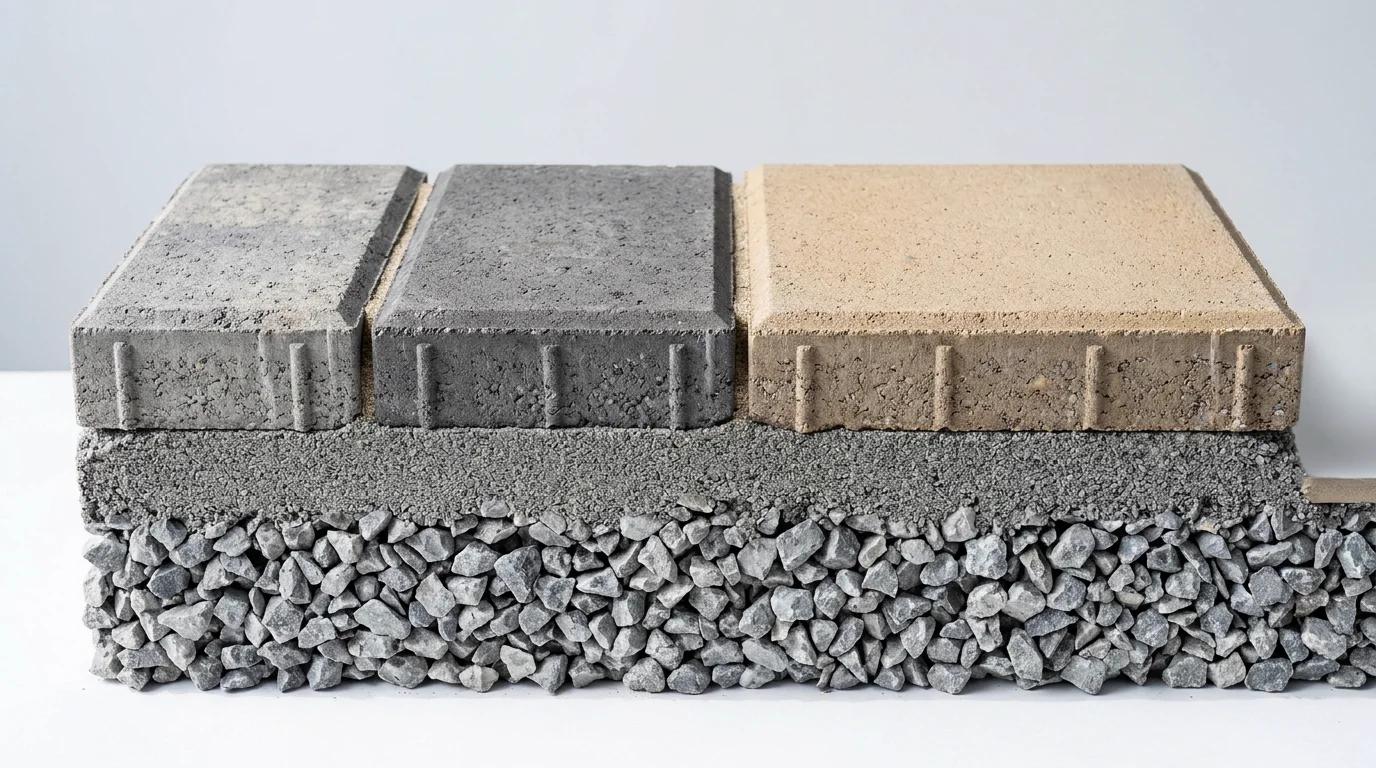
Permeable and vehicular 80 mm concrete pavers for driveways and parking aprons.
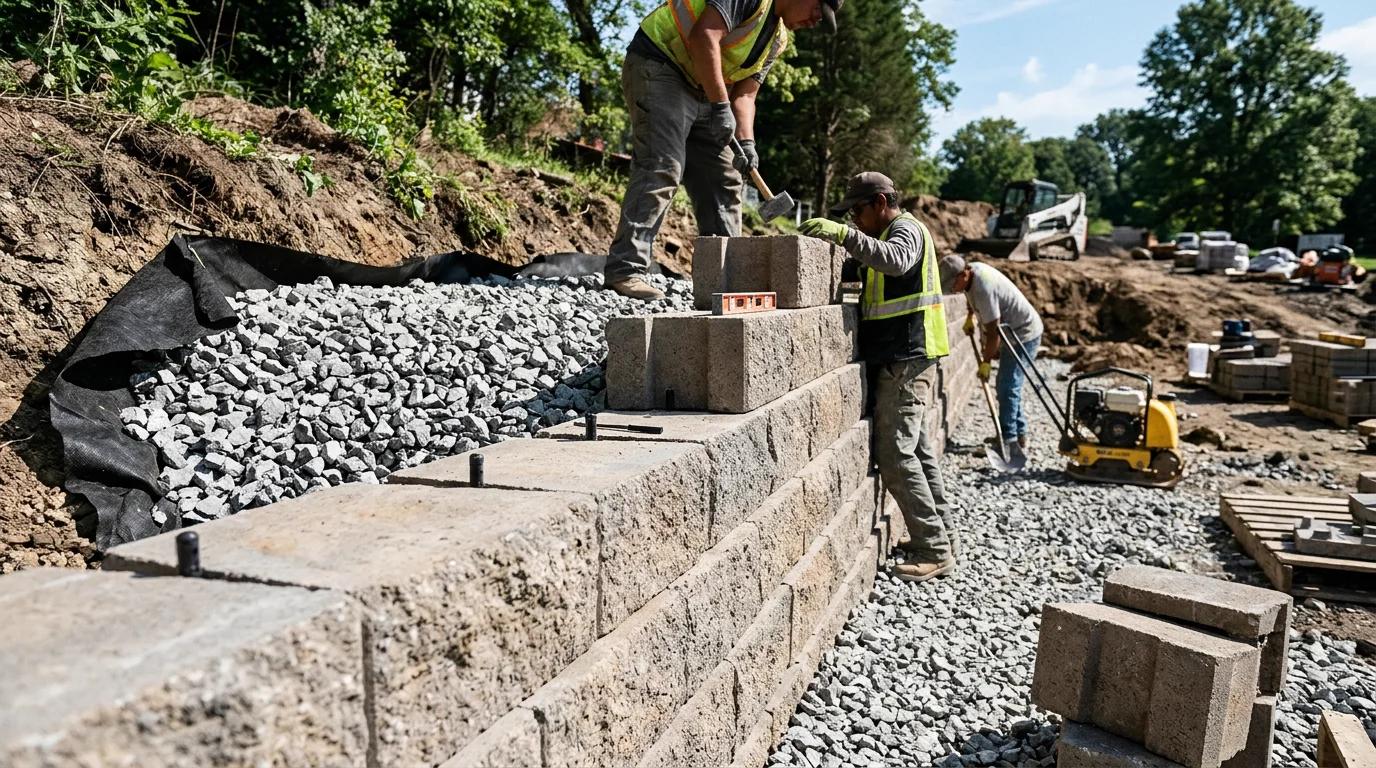
Segmental concrete retaining curbs and lot perimeter grade-wall dimensions.
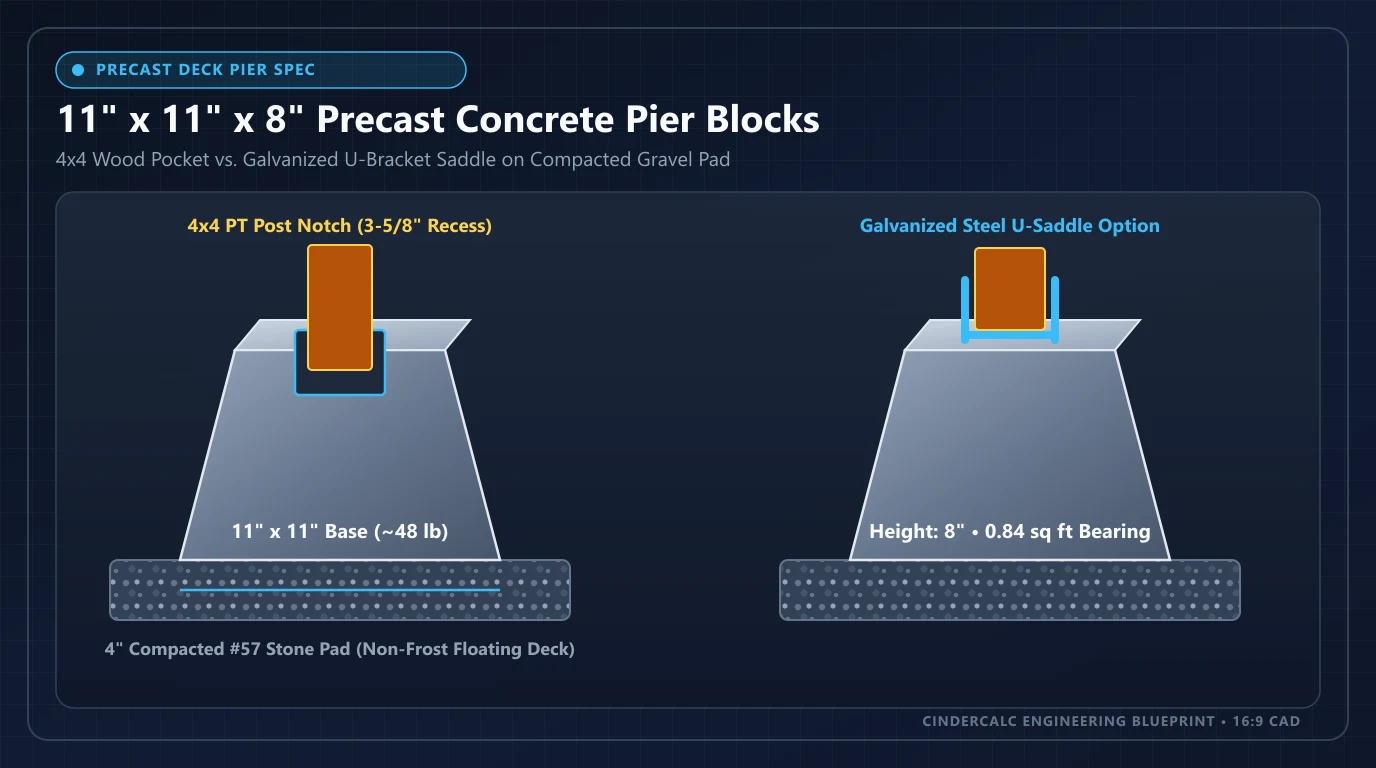
11×11×8 and 12×12×8 precast concrete footing blocks for site posts and sheds.
Factory-reinforced precast beams, rebar orientation, and crane rigging weights.
Material estimates depend on the selected dimensions, product yields, and waste allowance.
Concrete Parking Bumper Dimensions FAQ
Answers on 4-ft to 8-ft wheel stop profiles, ADA 36-inch pass-through gaps, 30–36 inch overhang setbacks, internal rebar, and pavement anchoring.
Popular Quick Estimates
Illustrative takeoffs with stated assumptions; verify project quantities
24x24 Garage Slab
576 ft² × 5/12 ft ÷ 27; excludes waste and design
4-in Patio Slab Takeoff
Ready-mix yardage with 10% subgrade allowance
Standard CMU Weight
Illustrative hollow-unit range; check supplier specs
Retaining Wall Budget
Illustrative budget range; replace with local quotes
Related Calculators
Specialized tools for foundation, core fill, and budgeting
Cubic yards, bags, and slab volume for flatwork and footings
2×2×6 and 2×2×3 interlocking mafia blocks, crane tons, and crushed stone pads
Ready-mix slab yardage, gravel base tons, #4 rebar grid, and finish labor budget tiers
ACI 302.1R saw-cut spacing grid, blade depth, linear feet, and 29-oz sealant tubes
Blogs & Construction Guides
Practical guides to block sizing, material estimates and project planning
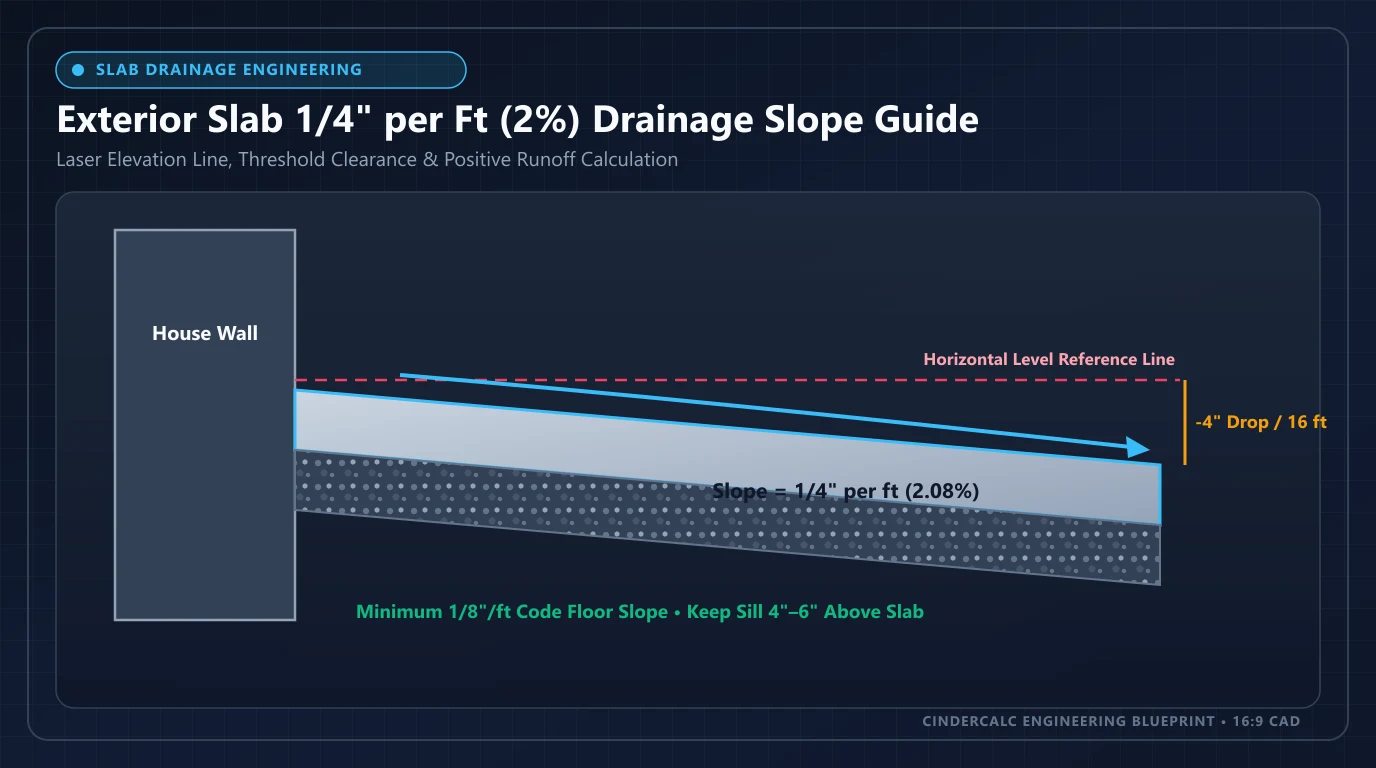
Concrete Patio & Driveway Drainage Slope Guide (1%–2%)
How Much Does a Concrete Driveway Cost? (2026 Price Guide)
Concrete Honeycombing: Causes, Severity & Repair Guide