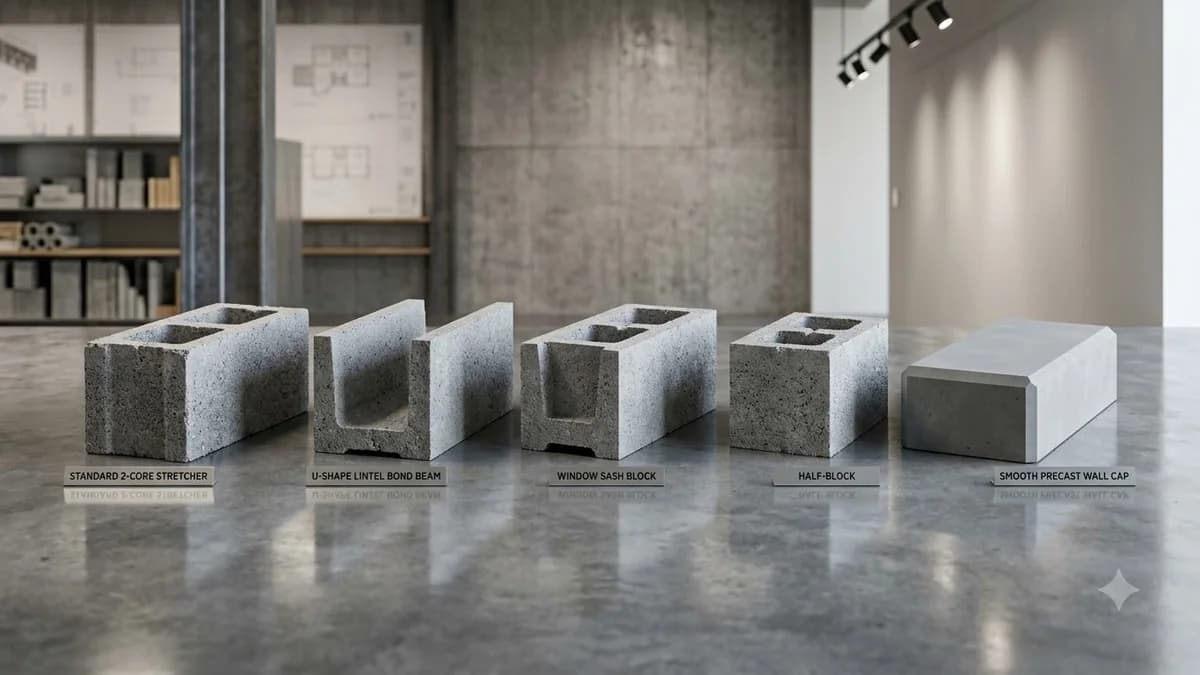
Types of Concrete Blocks: Shapes & Uses Guide (2026)
Explore all concrete block types: stretcher, corner, bond beam, lintel, sash, pilaster, split-face. Dimensions, shapes, and structural CMU applications.
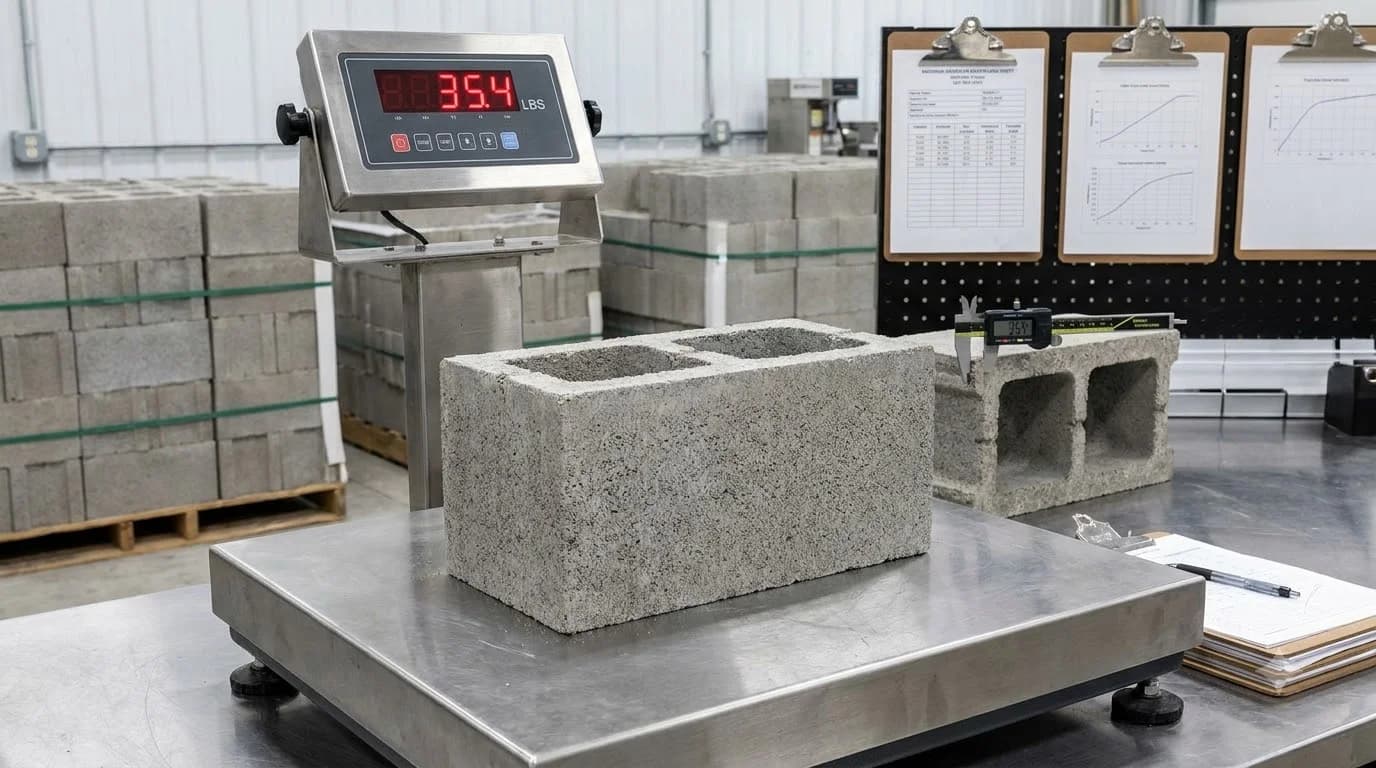
How Much Does a Concrete Block Weigh? (CMU Weight Chart)
Compare example block weights and calculate shipment weight using supplier-specific unit weights, grout volumes, and pallet quantities.
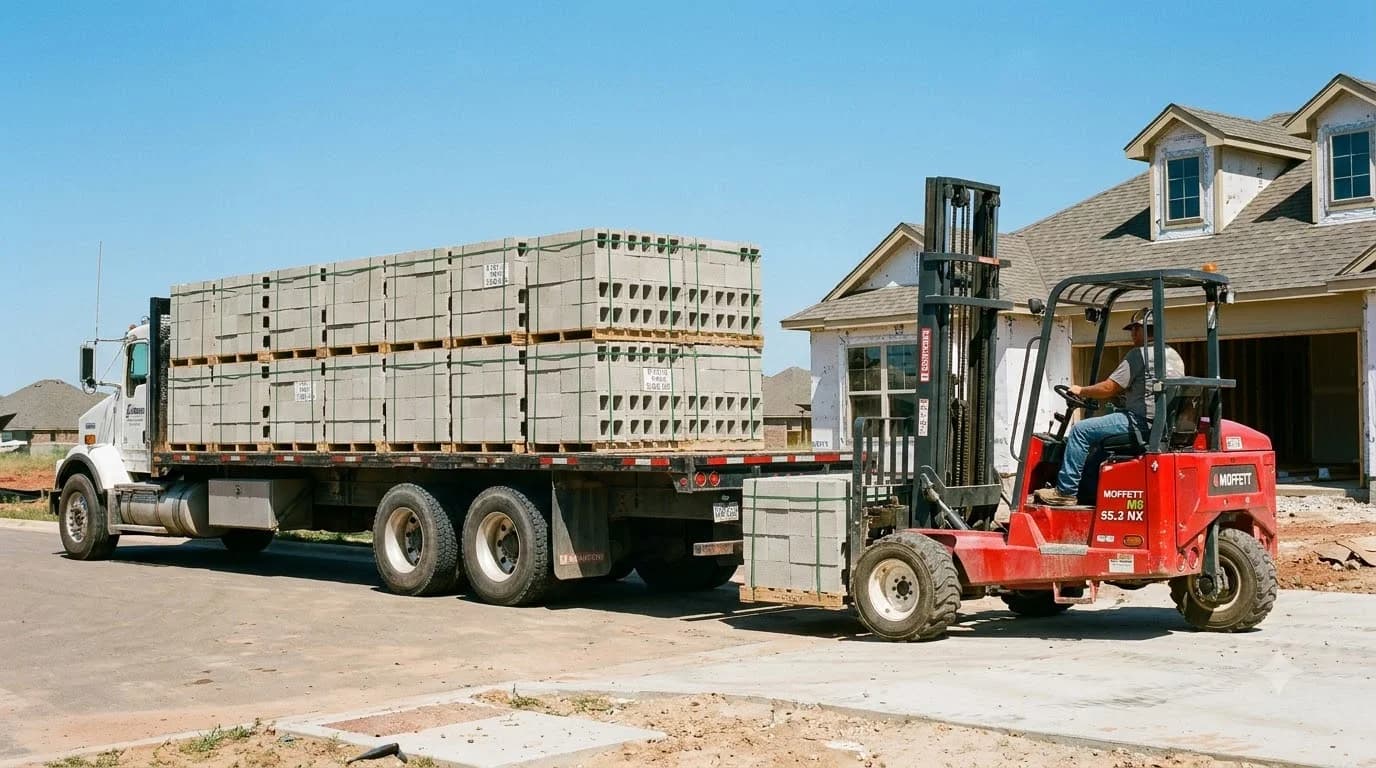
How Much Does a Pallet of Concrete Weigh? (~3,360 lbs)
Find out the exact weight of a pallet of concrete bags or CMU blocks. Compare 40, 60, and 80 lb bag pallets against truck payload hauling limits.
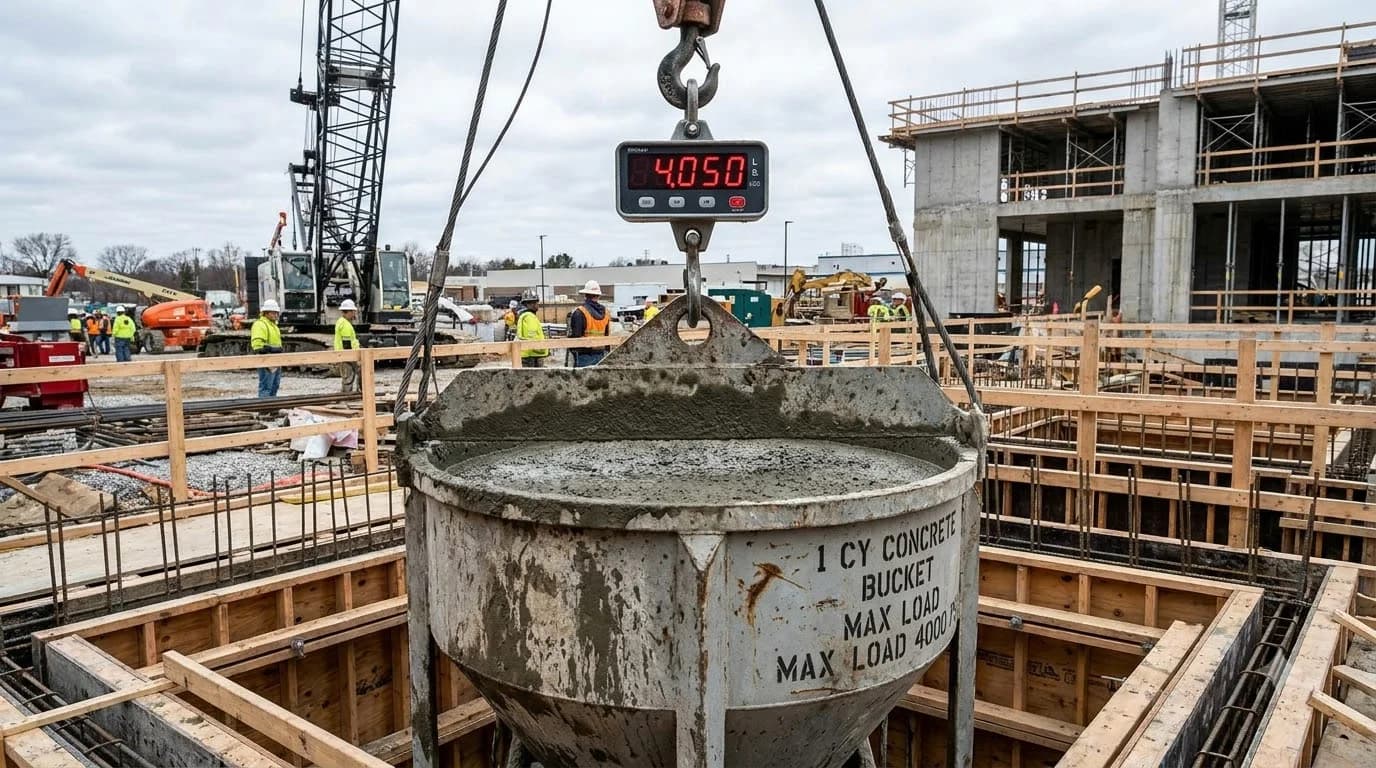
How Much Does a Yard of Concrete Weigh? 4,050 lb Wet & Dry
1 cubic yard of concrete weighs ~4,050 lbs (2 tons) cured or ~4,150 lbs wet. Compare weights for 0.5, 1, 2, 5, and 10 yards in lbs, tons, and bag counts.
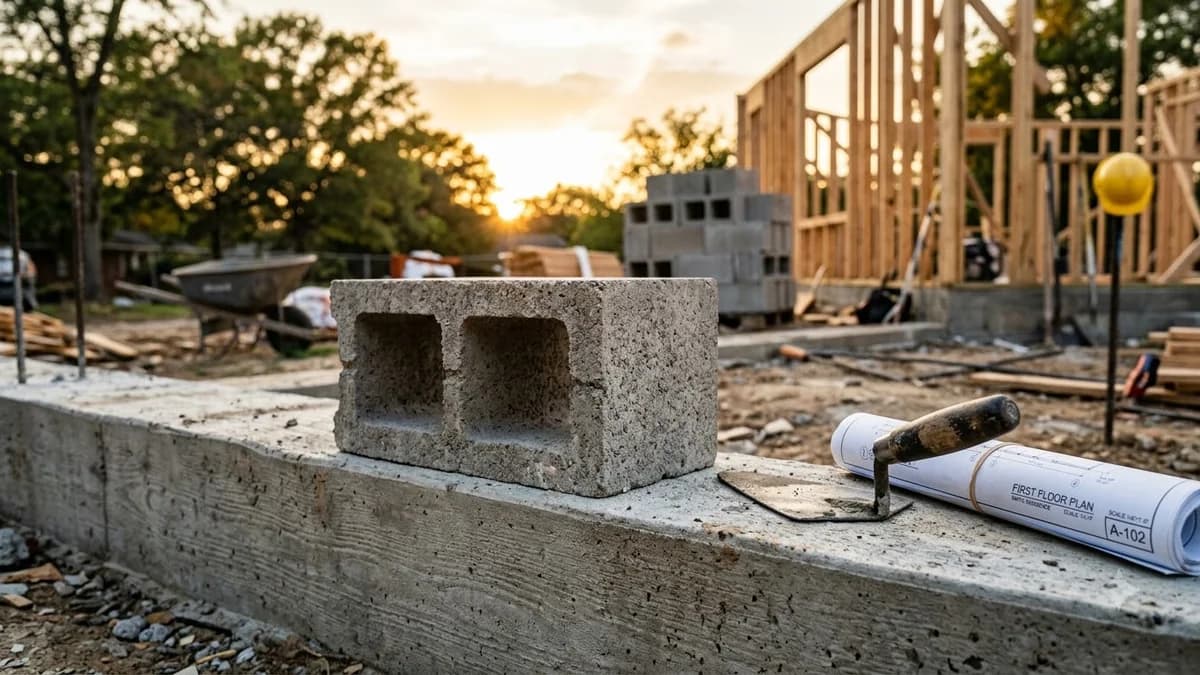
What Is a Cinder Block? History, CMU Specs & Materials
What is a cinder block? Discover the difference between historic coal-cinder blocks and modern ASTM C90 concrete masonry units (CMU), densities, and uses.
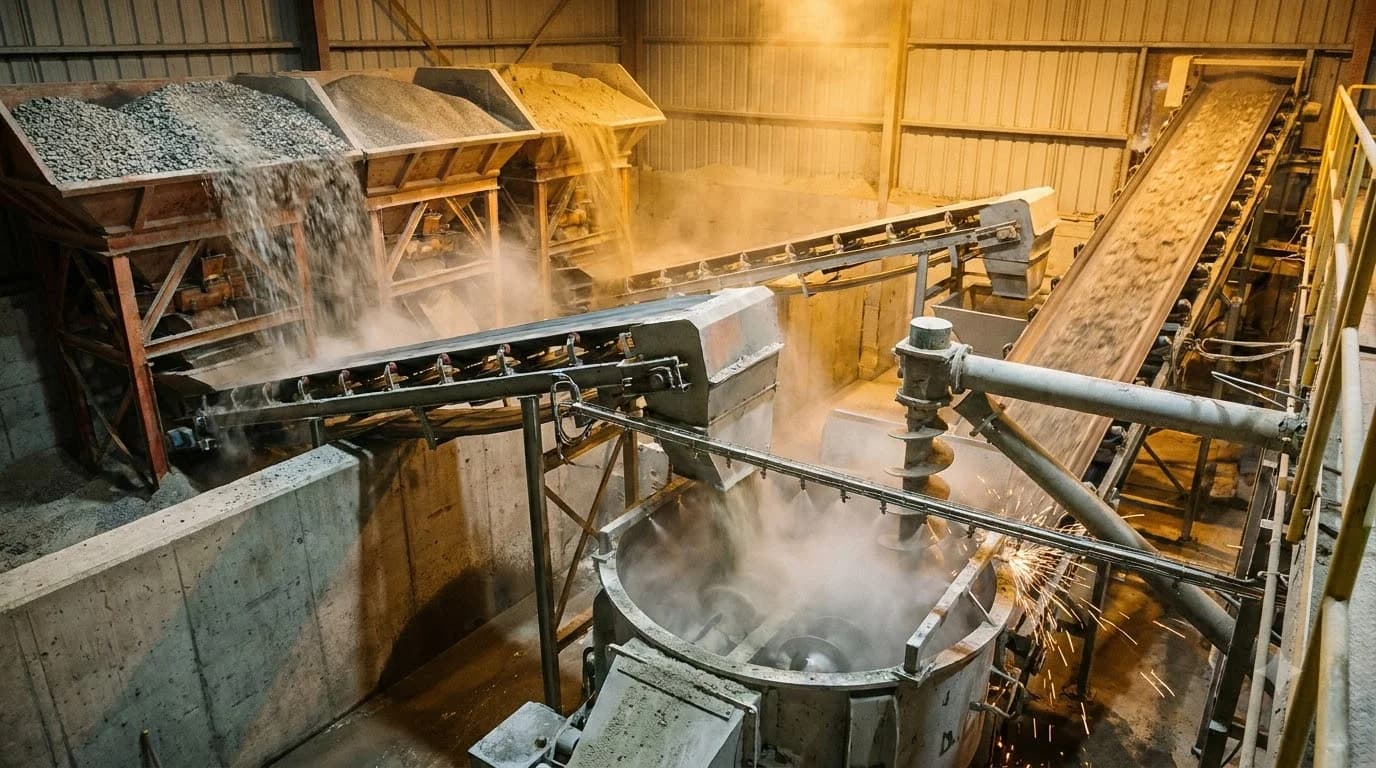
What is Concrete? Ingredients, Chemistry & Curing Math
Discover what concrete is, how it is made, and the chemical hydration that transforms cement, sand, gravel, and water into synthetic rock-hard stone.
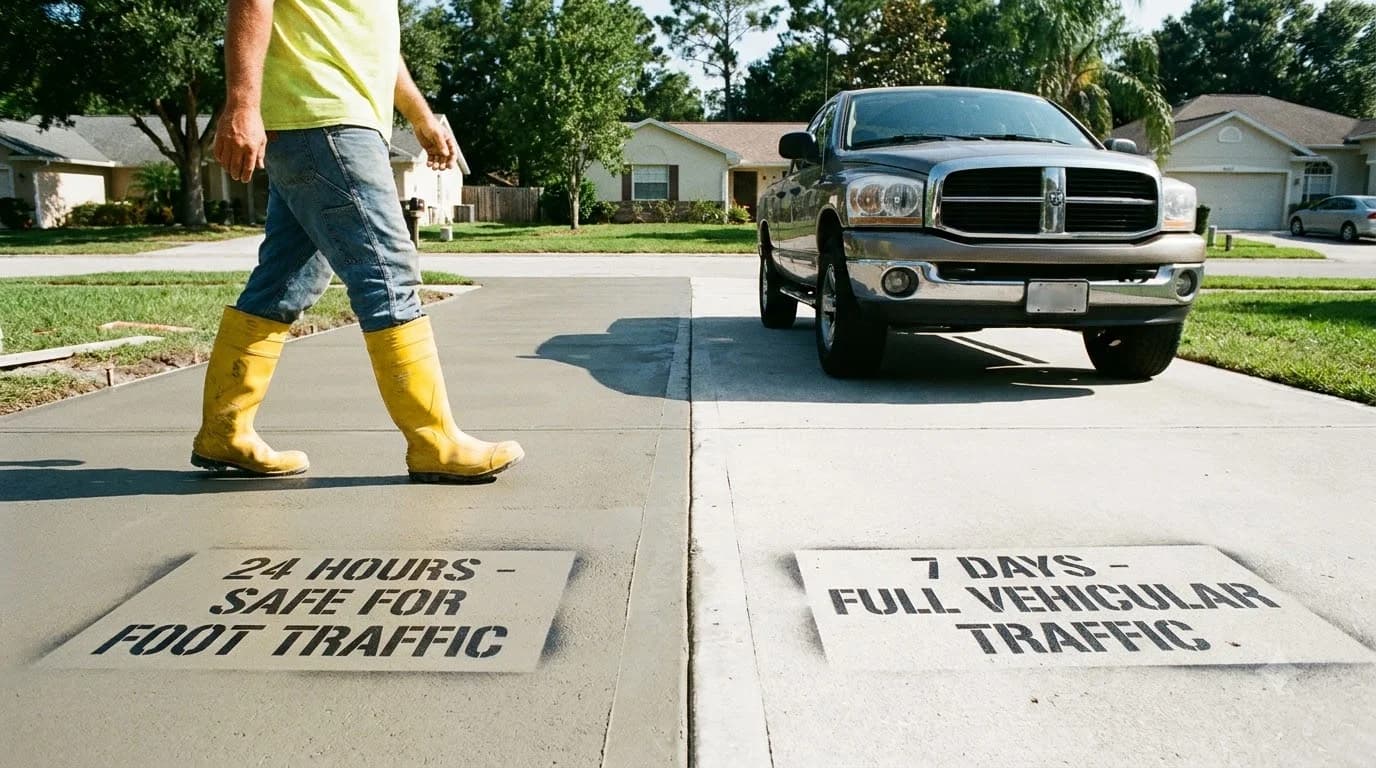
When Can You Walk or Drive on Concrete? (Timeline)
Find out exactly when it is safe to walk, place furniture, and drive cars on new concrete. Detailed weight load schedule based on PSI curing stages.
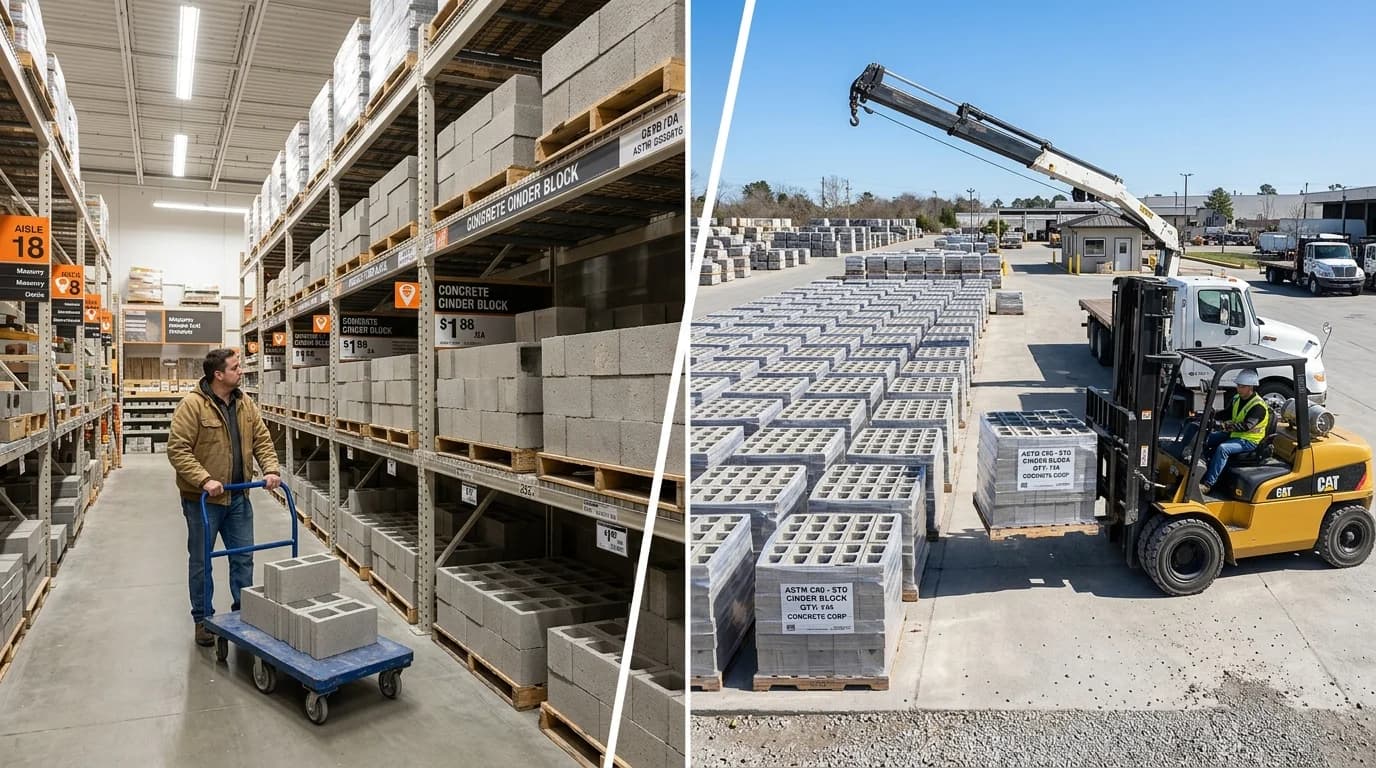
Where to Buy Cinder Blocks: Big Box vs Masonry Supply
Where to buy cinder blocks? Compare Home Depot, Lowe's, Menards, and local masonry supply yards on pallet minimums, pricing, and delivery fees.
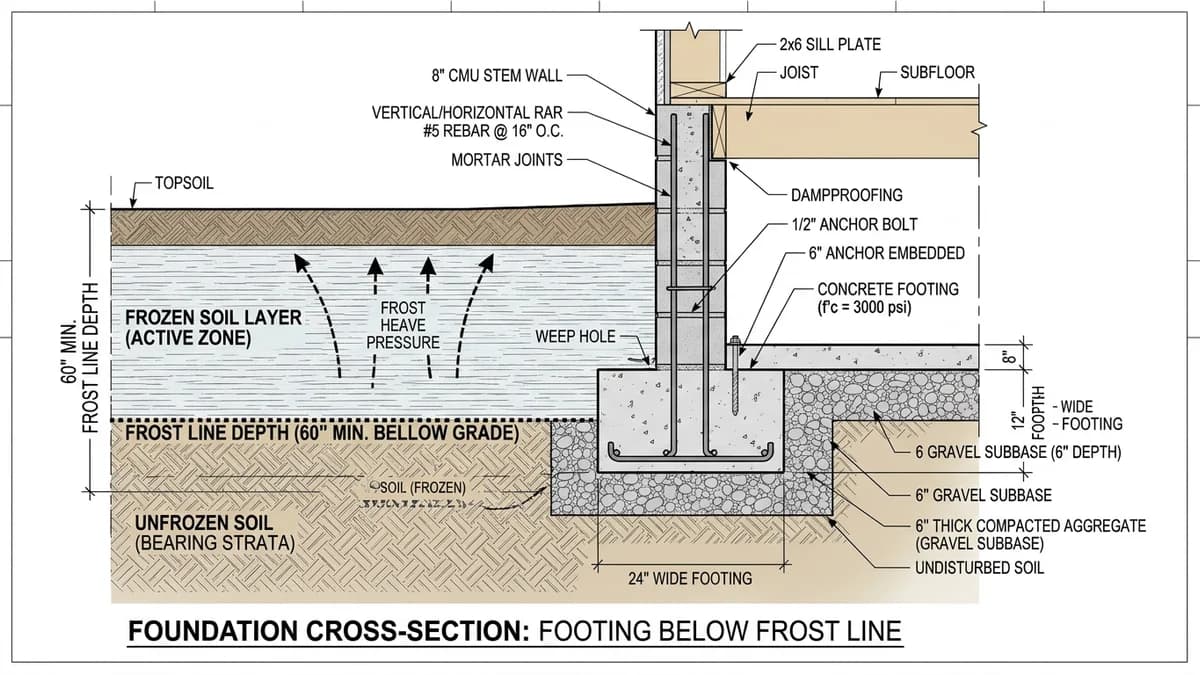
US Frost Line Depth by State: Footing Building Codes
Complete 50-state frost depth table under IRC Section R403.1.4. Review minimum footing depths, presumptive soil bearing capacities, and frost heave.

Who Invented Concrete? History from Romans to Portland
Explore the history of concrete: ancient Nabataean cisterns, Roman pozzolanic volcanic ash, and Joseph Aspdin's 1824 patent for modern Portland cement.
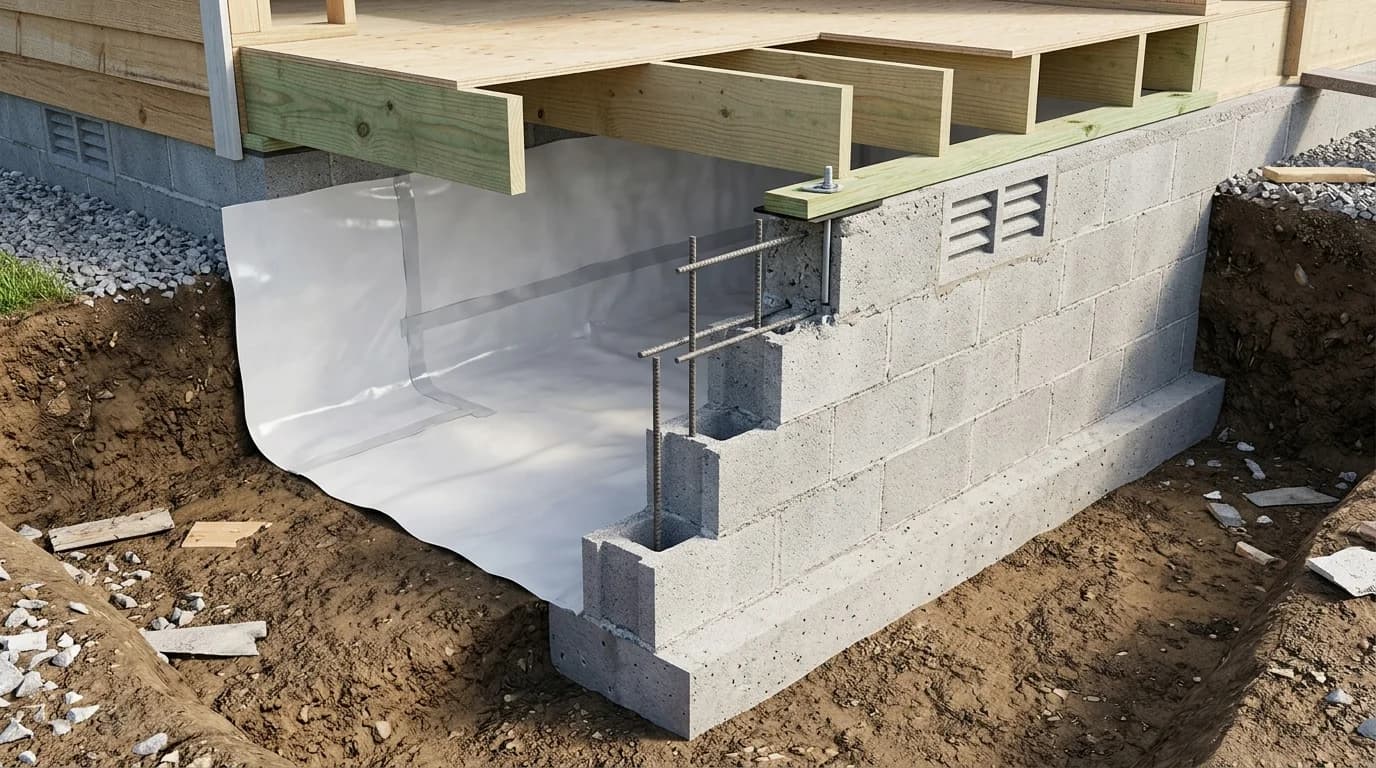
CMU vs Poured Concrete Foundation: Cost & Strength
Compare concrete block vs poured concrete foundation walls on lateral earth pressure, flexural strength, installation costs, and waterproofing needs.
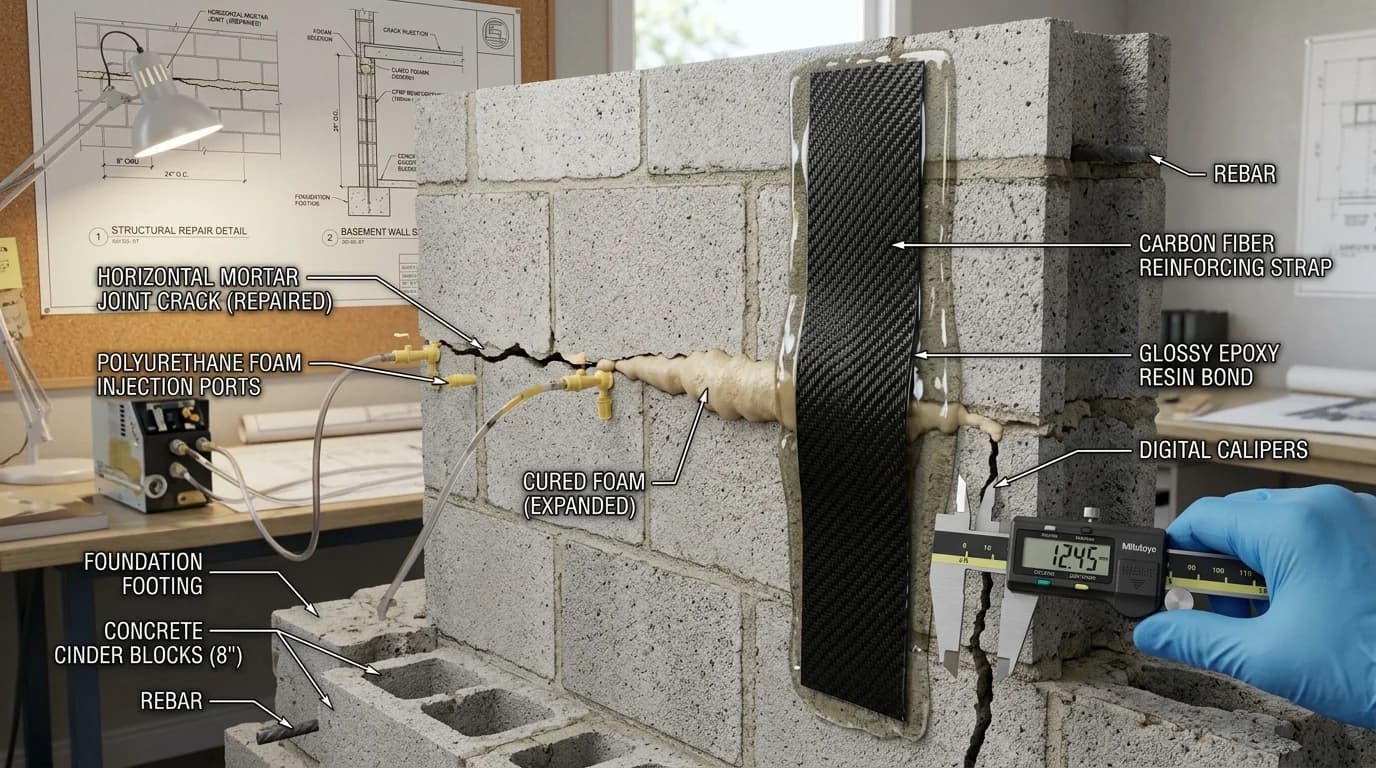
How to Fix a Bowing Cinder Block Wall: 4 Proven Ways
Repair bowing basement block walls from hydrostatic pressure. Compare carbon fiber straps under ICC-ES AC125, steel I-beams, and helical tiebacks.
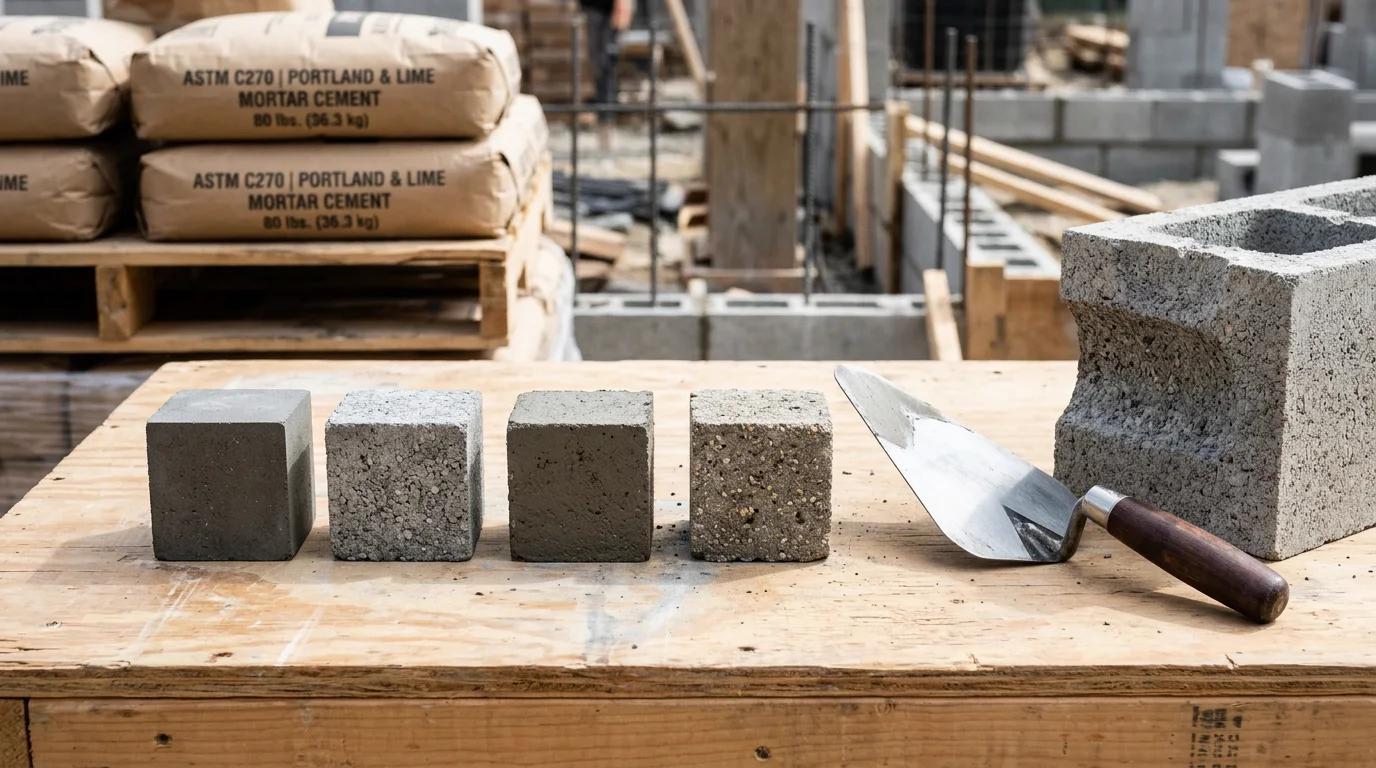
Mortar Types M, S, N, and O Guide: Strength & Mix Ratios
Compare ASTM C270 Type M, S, N, and O mortar compressive strength (350–2,500 PSI), Portland-lime-sand mix ratios, and bag yields per 100 CMU blocks.
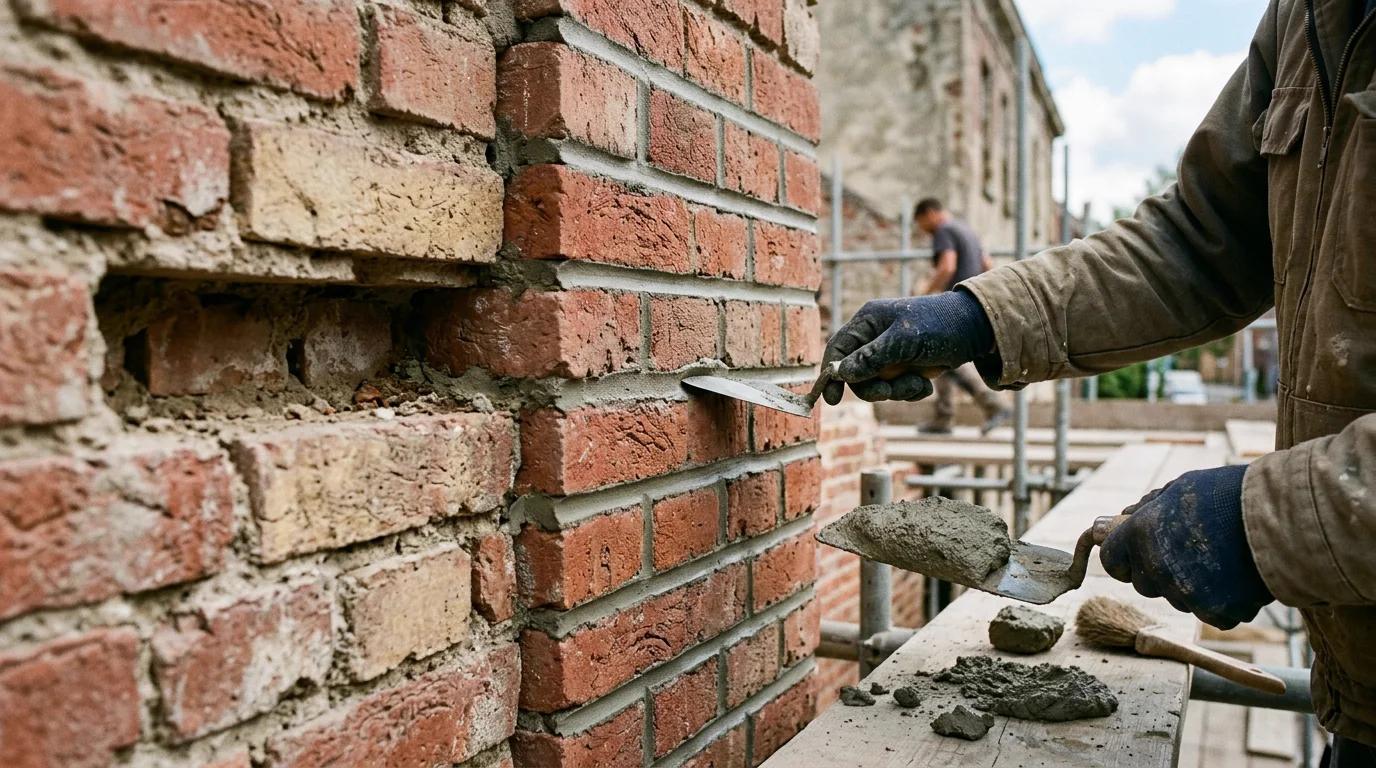
How to Tuckpoint and Repoint Mortar Joints (Step-by-Step)
Learn how to tuckpoint brick and CMU mortar joints: grind 3/4 inch deep, match Type N or O mortar, pre-hydrate, pack in lifts, and tool concave.
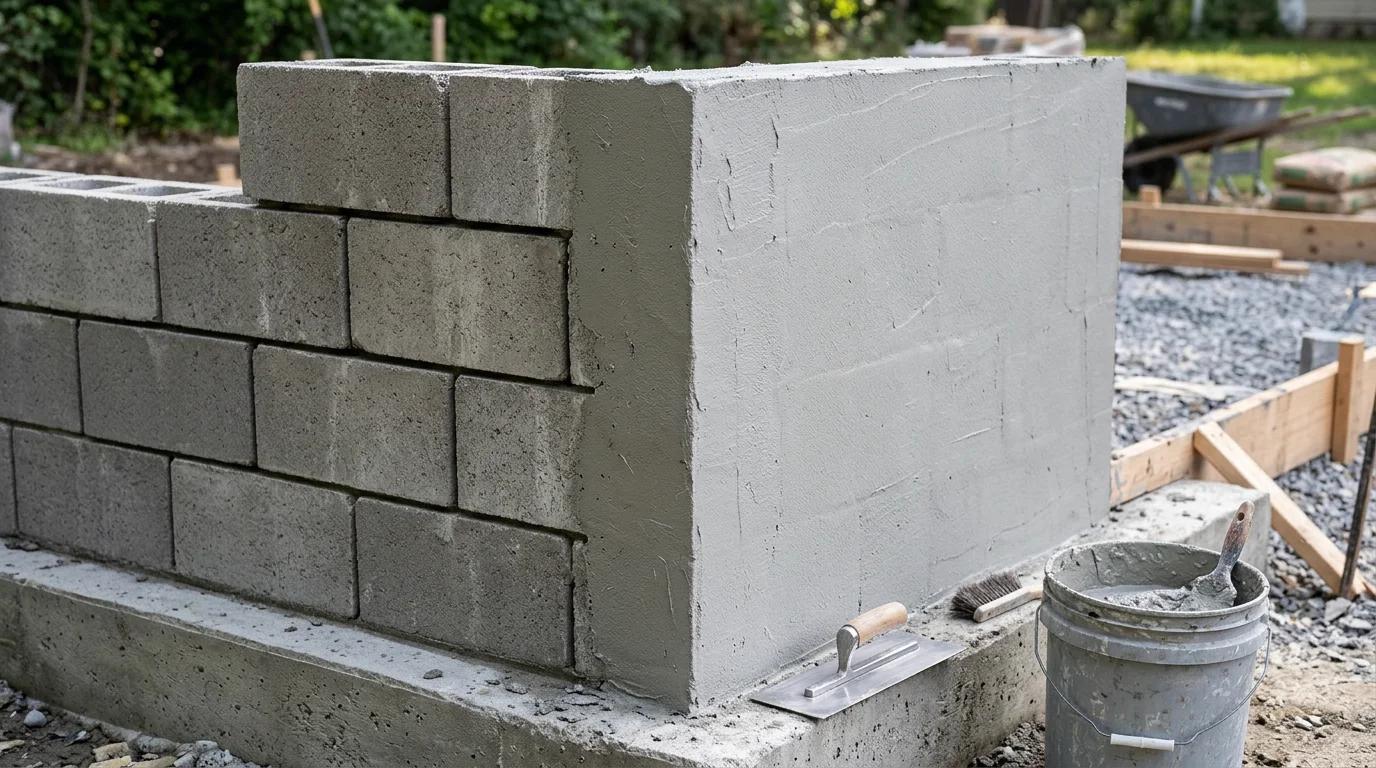
Dry-Stack Cinder Block Walls & Surface Bonding Cement Guide
How dry-stack cinder block walls work with ASTM C887 surface bonding cement: 1st-course mortar bed, 45 sq ft/bag SBC coverage, rebar grouting, and limits.
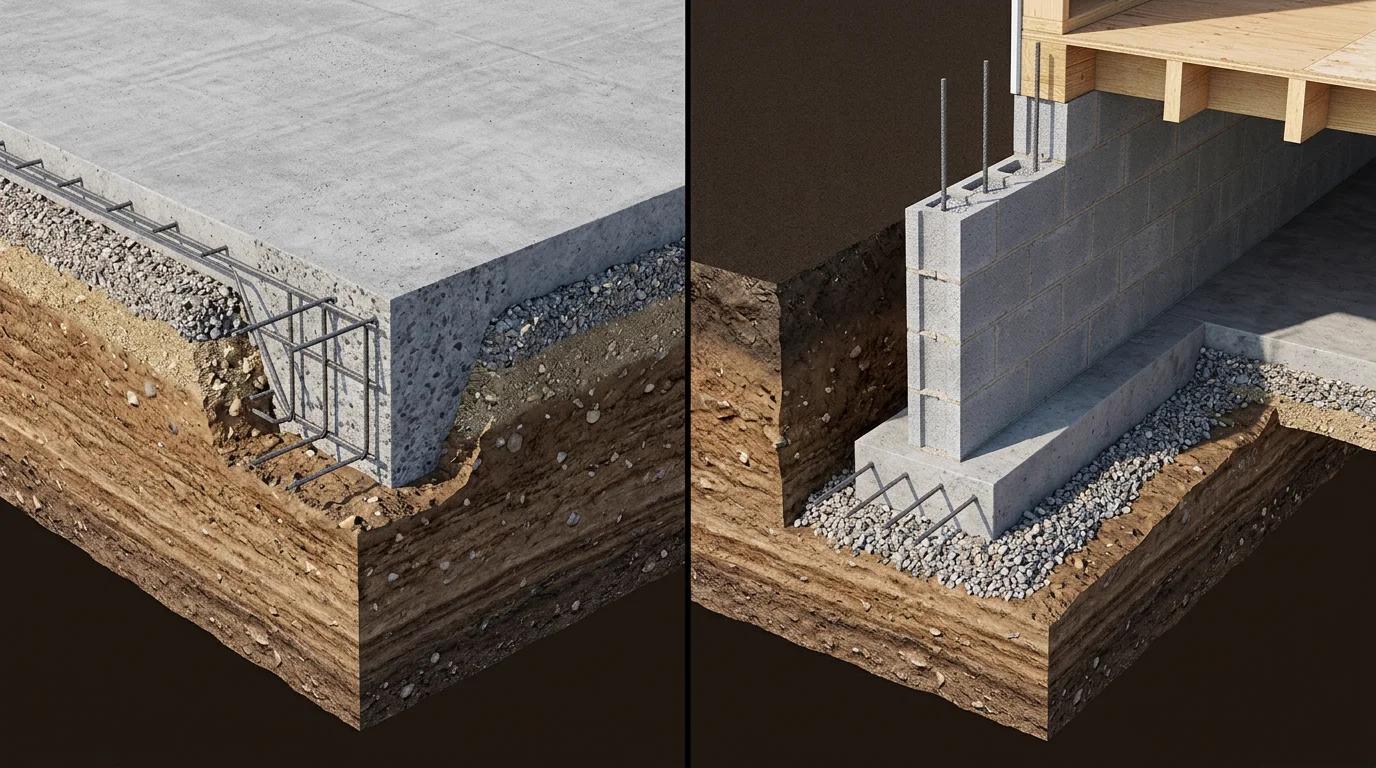
Monolithic Slab vs Stem Wall Foundation: Cost & Frost Guide
Compare thickened-edge monolithic concrete slabs against CMU block stem walls across frost depth (IRC R403), sloped lots, plumbing access, and yardage.
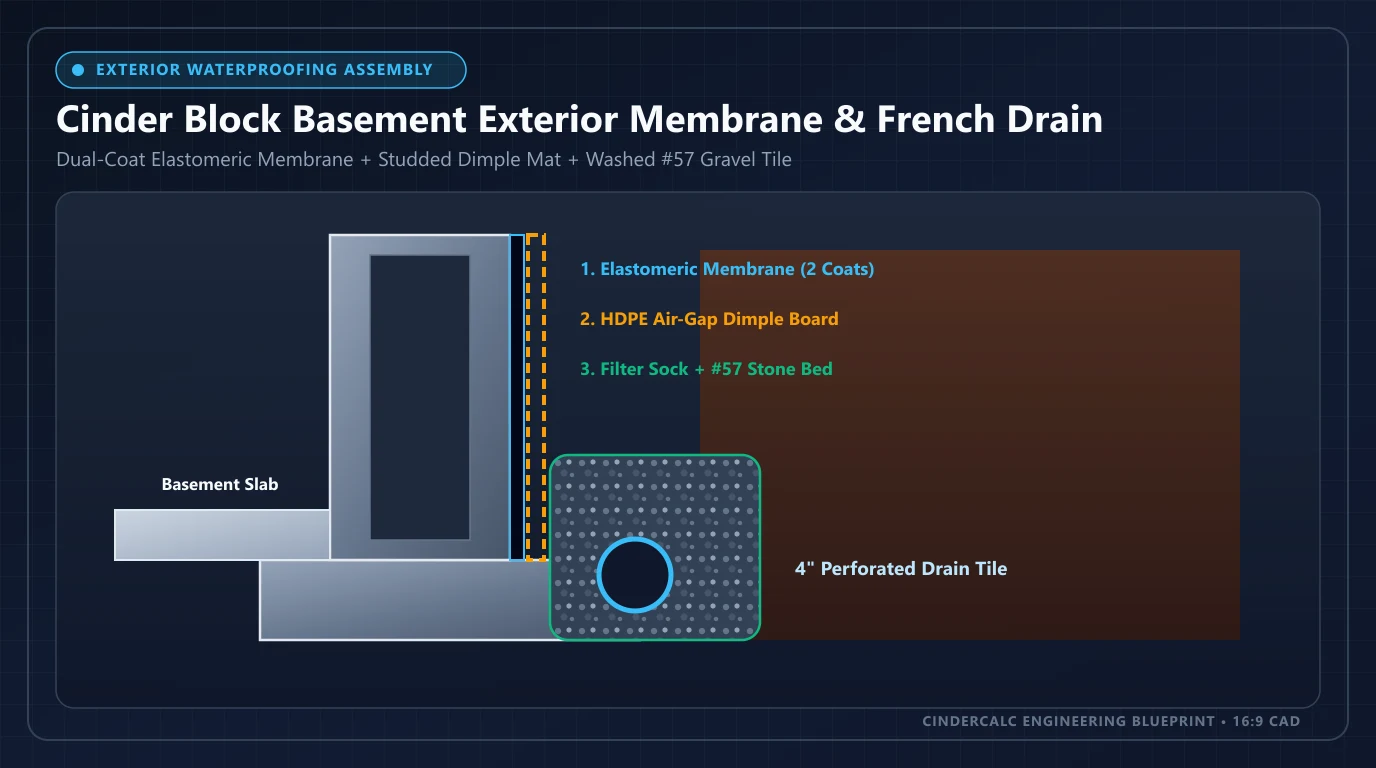
Waterproofing Cinder Block Basement Walls: IRC R406 Guide
Stop cinder block basement leaks using IRC R406 exterior membranes, dimple mats, #57 gravel French drains, weep holes, and interior sump channels.
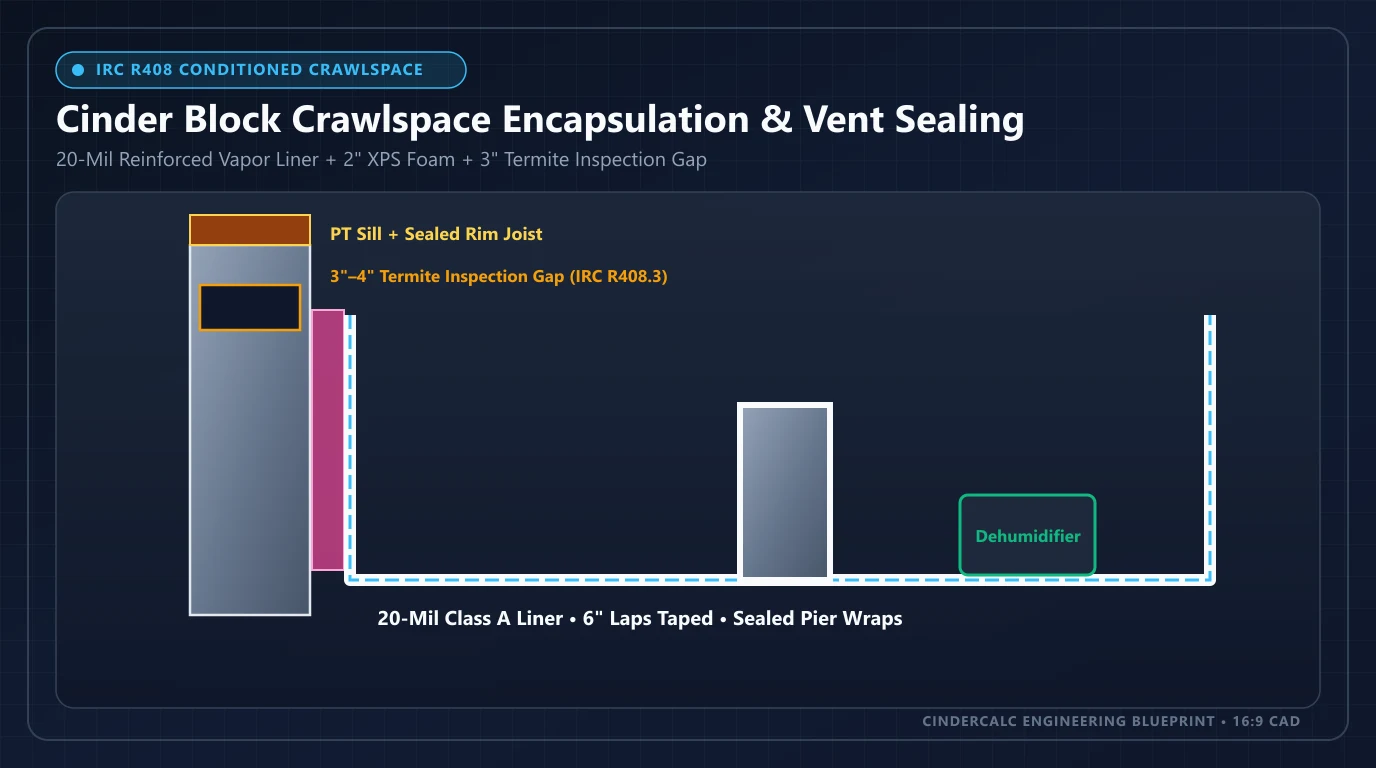
Cinder Block Crawlspace Encapsulation & Vent Sealing Guide
Seal 8×16 cinder block crawlspace vents, size 12- or 20-mil vapor barriers (6–12 in laps) per IRC R408.3, and insulate CMU stem walls with rigid foam.
Popular Quick Estimates
Illustrative takeoffs with stated assumptions; verify project quantities
24x24 Garage Slab
576 ft² × 5/12 ft ÷ 27; excludes waste and design
10x10 Wall Estimate
Standard residential yard & garden wall run
Type S Mortar Bags
Example 30 blocks per 80-lb bag; check product yield
Crawlspace Stem Wall
Course-height example; footing design is site-specific
Related Calculators
Specialized tools for foundation, core fill, and budgeting
Patio and driveway interlocking pavers with base sand
Roof truss-to-CMU tie-down clips, uplift wind capacity, and anchor embedment
BIA 18A movement joint spacing, width, closed-cell backer rod, and sealant tubes
9-gauge ladder and truss joint wire rolls, corner tees, and bed joint spacing
Blogs & Construction Guides
Practical guides to block sizing, material estimates and project planning

How to Pressure Wash Concrete Patios: Safe PSI & Tips

Self-Leveling Concrete Underlayment: DIY Floor Guide
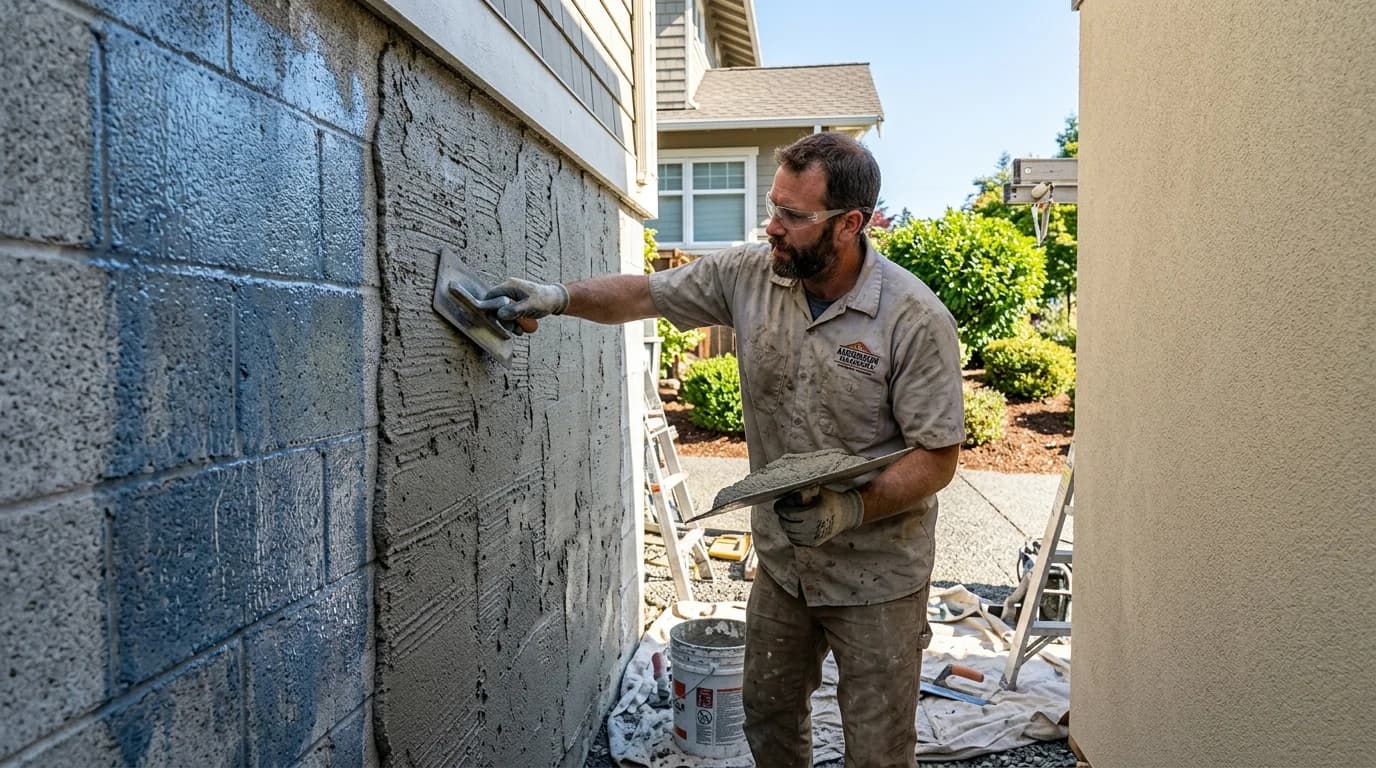
How to Stucco & Parge Over Cinder Block Walls